
 Tweet
Tweet
XCOR's Lynx spaceplane - the one most people haven't heard of but is causing a lot of excitement as an experimental platform (and cheaper joyrides than SS2).
Test flights 2013-early 2014, full flight schedule mid 2014.
XCOR background info:
XCOR Aerospace has been in the aerospace business since 1999. They have a facility at the Mojave Spaceport in California just down the tarmac from Virgin Galactic, but they are moving much of their operations to Midland, Texas. Their specialty is highly innovative re-usable liquid fueled rocket engines and related hardware.
A big project is a joint-venture with Boeing to develop a very low cost 30,000 lb-f thrust 2nd stage liquid hydrogen engine that could easily be scaled way up. They have also developed a reciprocating piston liquid hydrogen/LOX pump that could cut booster costs by replacing the very expensive turbopumps currently in use. Better for re-usable rockets too. Lots of interested parties for that one.
Article on cryogenic rocket engine piston pumps....
Then there is the project that is getting a lot of attention, and customers, the Lynx suborbital spaceplane. Lynx is on one hand like Virgin Galactic's SpaceShipTwo, and on the other hand very different.
SS2 - Lynx comparisons:
SS2 is 60ft/18.29m long with a 27ft/8.23m wingspan.
Lynx is 30ft/9m long with a 24ft/7.5m wingspan
SS2 is launched from the White Knight Two mothership at 50,000 feet.
Lynx takes off directly from the ground. No mothership.
SS2 uses a hybrid solid/liquid engine; rubber fuel, nitrous oxide oxidizer.
Lynx uses 4 rapidly re-usable 12.9 kN (2900 lbf) liquid rocket engines; kerosene fuel, liquid oxygen oxidizer. These engines have been extensively tested since 2008 at Edwards Air Force Base's facilities.
SS2 carries 6 passengers and a crew of 2.
Lynx carries 0-1 passengers and a crew of 1.
SS2 passengers will be able to de-seat and float around and look out through portholes.
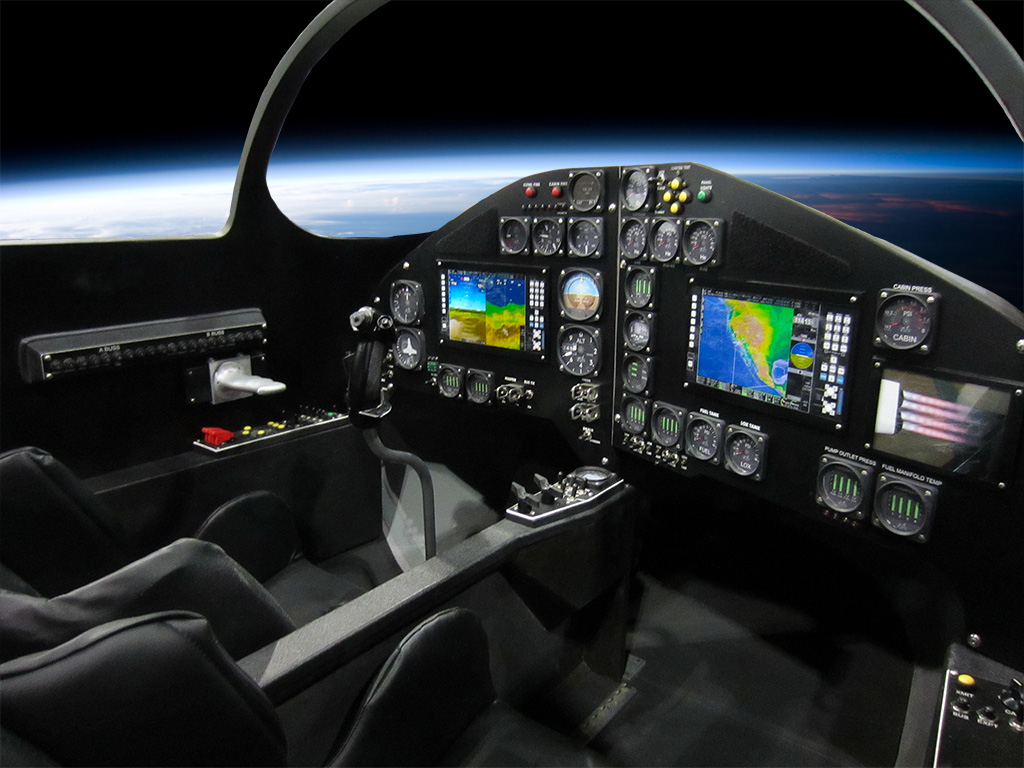
Lynx passengers will have to remain seated, but the cockpit has a panoramic view.
SS2 can only fly from spaceports with a runway capable of handling White Knight Two and refurbing its hybrid engine
Lynx can fly from shorter runways, 1800 ft for takeoffs (!!) and 7900 ft for emergency landings, and the kerosene/liquid oxygen handling can be done using a portable cart. Much simpler ops.
SS2 can carry internal experiments and mount external micro-satellite size payloads.
Lynx can do the same, but it can also launch small satellites from a Dorsal Pod on its back, or even carry the ATSA space telescope by the Planetary Science Institute & Southwest Regional Institute (SwRI) for missions like NASA's Sophia flying telescope - but much, much higher and cheaper.
The Lynx composite wing is going to be built by ATK, a major aerospace company known for the Shuttle and coming Space Launch System solid rocket boosters. Tons of experience with composite structures for space.
Lynx I is the development vehicle and will be made of field-modifyable materials, but these will limit the max altitude to ~300,000 ft. due to re-entry temps. Once the inevitable chances are frozen Lynx II's will start production using materials capable of much higher altitude re-entries. Lynx III gets the Dorsal Pod and upgrades.
This is not theoretical or iffy - Lynx is very real with numerous sold missions, many to NASA and major universities. Foreign govt. interest as well. The experiment rack that can replace the passenger seat uses 2 NASA standard Space Shuttle mid-bay racks, which most universities etc. know how to use and are well documented.
Spaceports for flying Lynx are being built from the US and Curaçao to Abu Dhabi and South Korea. This kitty's going to get a lot of work, with up to 4 flights a day per spacecraft possible with just a 2 hour turnaround (maintenance every 40 flights.)
A true gas-n-go spaceplane.
XCOR is also working on a larger, orbital, Lynx-like vehicle that will also take off from a runway, but using a fly-back booster.
Pics below with appropriate labeling -
Lynx spaceplane

Lynx cockpit
Lynx cutaway

Lynx cockpit cutaway - payloads

Lynx with Dorsal Pod (Lynx III)

Lynx launching booster + satellite (or ??) from the Dorsal Pod

Lynx with the Planetary Science Institute's ATSA space telescope in its Dorsal Pod

Lynx Cub mini-experiment platform announcement

Flight profile animation

Test flights 2013-early 2014, full flight schedule mid 2014.
XCOR background info:
XCOR Aerospace has been in the aerospace business since 1999. They have a facility at the Mojave Spaceport in California just down the tarmac from Virgin Galactic, but they are moving much of their operations to Midland, Texas. Their specialty is highly innovative re-usable liquid fueled rocket engines and related hardware.
A big project is a joint-venture with Boeing to develop a very low cost 30,000 lb-f thrust 2nd stage liquid hydrogen engine that could easily be scaled way up. They have also developed a reciprocating piston liquid hydrogen/LOX pump that could cut booster costs by replacing the very expensive turbopumps currently in use. Better for re-usable rockets too. Lots of interested parties for that one.
Article on cryogenic rocket engine piston pumps....
Then there is the project that is getting a lot of attention, and customers, the Lynx suborbital spaceplane. Lynx is on one hand like Virgin Galactic's SpaceShipTwo, and on the other hand very different.
SS2 - Lynx comparisons:
SS2 is 60ft/18.29m long with a 27ft/8.23m wingspan.
Lynx is 30ft/9m long with a 24ft/7.5m wingspan
SS2 is launched from the White Knight Two mothership at 50,000 feet.
Lynx takes off directly from the ground. No mothership.
SS2 uses a hybrid solid/liquid engine; rubber fuel, nitrous oxide oxidizer.
Lynx uses 4 rapidly re-usable 12.9 kN (2900 lbf) liquid rocket engines; kerosene fuel, liquid oxygen oxidizer. These engines have been extensively tested since 2008 at Edwards Air Force Base's facilities.
SS2 carries 6 passengers and a crew of 2.
Lynx carries 0-1 passengers and a crew of 1.
SS2 passengers will be able to de-seat and float around and look out through portholes.
Lynx passengers will have to remain seated, but the cockpit has a panoramic view.
SS2 can only fly from spaceports with a runway capable of handling White Knight Two and refurbing its hybrid engine
Lynx can fly from shorter runways, 1800 ft for takeoffs (!!) and 7900 ft for emergency landings, and the kerosene/liquid oxygen handling can be done using a portable cart. Much simpler ops.
SS2 can carry internal experiments and mount external micro-satellite size payloads.
Lynx can do the same, but it can also launch small satellites from a Dorsal Pod on its back, or even carry the ATSA space telescope by the Planetary Science Institute & Southwest Regional Institute (SwRI) for missions like NASA's Sophia flying telescope - but much, much higher and cheaper.
The Lynx composite wing is going to be built by ATK, a major aerospace company known for the Shuttle and coming Space Launch System solid rocket boosters. Tons of experience with composite structures for space.
Lynx I is the development vehicle and will be made of field-modifyable materials, but these will limit the max altitude to ~300,000 ft. due to re-entry temps. Once the inevitable chances are frozen Lynx II's will start production using materials capable of much higher altitude re-entries. Lynx III gets the Dorsal Pod and upgrades.
This is not theoretical or iffy - Lynx is very real with numerous sold missions, many to NASA and major universities. Foreign govt. interest as well. The experiment rack that can replace the passenger seat uses 2 NASA standard Space Shuttle mid-bay racks, which most universities etc. know how to use and are well documented.
Spaceports for flying Lynx are being built from the US and Curaçao to Abu Dhabi and South Korea. This kitty's going to get a lot of work, with up to 4 flights a day per spacecraft possible with just a 2 hour turnaround (maintenance every 40 flights.)
A true gas-n-go spaceplane.
XCOR is also working on a larger, orbital, Lynx-like vehicle that will also take off from a runway, but using a fly-back booster.
Pics below with appropriate labeling -
Lynx spaceplane
Lynx cockpit
Lynx cutaway
Lynx cockpit cutaway - payloads
Lynx with Dorsal Pod (Lynx III)
Lynx launching booster + satellite (or ??) from the Dorsal Pod
Lynx with the Planetary Science Institute's ATSA space telescope in its Dorsal Pod
Lynx Cub mini-experiment platform announcement
Lynx Cub Payload Carrier Being Developed at Texas A&M
College Station, Texas (Mar. 28, 2013) – A new payload carrier promises to dramatically reduce the cost of access to space for small scientific and education payloads.
The Lynx Cub Payload Carrier was announced today by the United States Rocket Academy. The Lynx Cub Carrier will fly on the XCOR Lynx space plane, now under construction at the Mojave Air and Space Port, and carry up to 12 experiments on each flight.
“The Lynx Cub Payload Carrier is a versatile system that installs in the Lynx cabin, behind the pilot’s seat, allowing small experiments to be carried as secondary payloads on any Lynx flight,†said United States Rocket Academy chairman Edward Wright. “The Cub Carrier can be installed and removed quickly for frequent, low-cost flight opportunities.â€
Citizens in Space, a project of the United States Rocket Academy, will fly the Lynx Cub Carrier on 10 Lynx missions beginning in late 2014 or early 2015. The Lynx Cub Carrier will also be made available to other XCOR customers, as ready-to-fly hardware or as an open-source hardware design.
>
College Station, Texas (Mar. 28, 2013) – A new payload carrier promises to dramatically reduce the cost of access to space for small scientific and education payloads.
The Lynx Cub Payload Carrier was announced today by the United States Rocket Academy. The Lynx Cub Carrier will fly on the XCOR Lynx space plane, now under construction at the Mojave Air and Space Port, and carry up to 12 experiments on each flight.
“The Lynx Cub Payload Carrier is a versatile system that installs in the Lynx cabin, behind the pilot’s seat, allowing small experiments to be carried as secondary payloads on any Lynx flight,†said United States Rocket Academy chairman Edward Wright. “The Cub Carrier can be installed and removed quickly for frequent, low-cost flight opportunities.â€
Citizens in Space, a project of the United States Rocket Academy, will fly the Lynx Cub Carrier on 10 Lynx missions beginning in late 2014 or early 2015. The Lynx Cub Carrier will also be made available to other XCOR customers, as ready-to-fly hardware or as an open-source hardware design.
>
 Looking for people that know Solid Works and build things - even if it's race cars (since they're making piston pumps for rockets.)
Comment